

You’ve handled the hard thing. The kids are in bed. The deadline is met. The crisis, whatever it was, has passed.
And yet your body is still braced for impact.
Your jaw is tight. Your shoulders are somewhere near your ears. Your mind is still cycling through everything that happened and everything that could still go wrong. You lie down to sleep and your nervous system has other plans.
This is what chronic stress does and if you’re a mom who has been running on cortisol fumes for months or years, a nervous system reset isn’t something that happens automatically when the stressor disappears. Your body has to be actively guided back to safety. That’s exactly what this post is about.
If you’ve been following The Physiology of Mom Stress series, you already understand the biology behind this. Chronic stress keeps your HPA axis, the hormonal command center governing your stress response, in a state of persistent activation. Cortisol stays elevated. Your body never fully receives the signal that the threat has passed. And over time, your nervous system gets stuck: wired for danger even when the immediate stressor has long resolved.
This post walks through four research-supported tools for nervous system reset after chronic stress. Not through willpower or positive thinking, but through sensation, movement, temperature, and breath. Tools that speak the language your nervous system actually understands.
Why Your Nervous System Gets Stuck in Stress Mode
To understand why these tools work, it helps to understand what’s happening when your nervous system won’t stand down.
Your autonomic nervous system has two primary branches. The sympathetic nervous system activates your fight-or-flight response by increasing heart rate, flooding your body with cortisol and adrenaline, sharpening your focus on threats. The parasympathetic nervous system does the opposite. It governs rest, digestion, repair, and recovery. You need both. The problem arises when chronic stress tips the balance so heavily toward sympathetic dominance that your parasympathetic system can’t get a foothold.
The vagus nerve is the key player in this balance. As the primary nerve of the parasympathetic system, it runs from your brainstem down through your heart, lungs, and digestive tract, carrying the “rest and digest” signals your body needs to recover. When vagal tone is high, meaning the vagus nerve is functioning well and actively, you recover from stress quickly. When vagal tone is chronically low from ongoing stress, your body loses its ability to downshift efficiently.
The good news: vagal tone is not fixed. Research consistently shows it can be strengthened through specific practices. The four tools below are among the most evidence-supported methods for doing exactly that.
Tool 1: Breathwork and Vagal Nerve Stimulation

Breathing is the only autonomic function you can consciously control and that makes it one of the most powerful levers for nervous system regulation available to you.
When you breathe slowly and deliberately, particularly with an extended exhale, you directly stimulate the vagus nerve through a mechanism called respiratory sinus arrhythmia. Your heart rate naturally rises slightly on the inhale and slows on the exhale. That slowing on the exhale is driven by vagal activity. The longer and more controlled your exhale, the stronger the parasympathetic signal.
A 2025 narrative review published in Stress and Health, analyzing 30 studies on breathwork, found that slow, nasal, diaphragmatic breathing significantly improves vagal tone, heart rate variability, and parasympathetic activity while reducing cortisol, anxiety, and stress markers. Even sessions as brief as two minutes produced measurable physiological benefits.
For moms who have heard about the 4-3-2-1 cortisol method from an earlier post in this series, the mechanism is the same. Slow, extended breathing activates your parasympathetic brake. Here are three breath patterns that research supports specifically for nervous system regulation:
Extended Exhale Breathing
Inhale for 4 counts, exhale for 6-8 counts. The extended exhale is the key. Research shows it produces stronger vagal activation than equal inhale/exhale ratios. Practice for 3-5 minutes when you feel your nervous system is elevated.
Box Breathing (4-4-4-4)
Inhale for 4 counts, hold for 4, exhale for 4, hold for 4. This pattern activates both branches of the autonomic nervous system in sequence, supporting overall regulation and is particularly useful for acute stress moments.
Coherence Breathing (5-5)
Inhale for 5 counts, exhale for 5 counts, aiming for approximately 6 breaths per minute. Multiple studies have found this rhythm optimizes heart rate variability and vagal tone. Even 5 minutes daily produces cumulative benefits over time.
The beauty of breathwork is that it requires nothing, no equipment, no appointment, no dedicated space. It works in your car, in the bathroom before a hard conversation, or in bed when sleep won’t come.
For guided breathwork and mindfulness practices grounded in the same neuroscience this post is built on, Mindful.org’s Audio Meditations are the resource I recommend most. These are short, evidence-based sessions that pair directly with the nervous system reset tools above.
Tool 2: Cold Water Exposure

Before you close this tab cold water exposure for nervous system regulation doesn’t require an ice bath or a cold plunge membership. It can be as simple as splashing cold water on your face.
Cold water applied to the face activates what’s called the mammalian diving reflex, an evolutionary response that immediately slows heart rate and shifts the body toward parasympathetic dominance. This reflex is mediated directly through the vagus nerve, making cold facial immersion one of the fastest ways to manually activate your parasympathetic system in an acute stress moment.
Research published in Scientific Reports found that applying a cold stimulus to the facee, the Cold Face Test, produced immediate parasympathetic activation, increased heart rate variability, and reduced markers of acute stress response. The effect was rapid and did not require full-body immersion.
For those open to more consistent practice, research on cold water immersion suggests longer-term benefits for stress resilience. A review published in Frontiers in Psychiatry found that repeated cold water exposure may produce a decreased cortisol response over time through cross-adaptation. This means the body’s stress response becomes more efficient and regulated with consistent practice.
Practical Cold Exposure Options for Busy Moms
- Cold face splash: Fill your sink with cold water and submerge your face for 15-30 seconds. This is the fastest, most accessible option for an acute stress spike.
- Cold shower finish: End your shower with 30-60 seconds of cold water. The research on mood and cortisol regulation is strongest for consistent practice over time.
- Cold water on the wrists and neck: Applying cold water to pulse points and the back of the neck can activate a similar cooling response without full facial immersion.
A note on safety: cold water exposure is not appropriate during pregnancy, for those with cardiovascular conditions, or Raynaud’s syndrome. Always check with your healthcare provider if you have concerns.
Tool 3: Somatic Movement
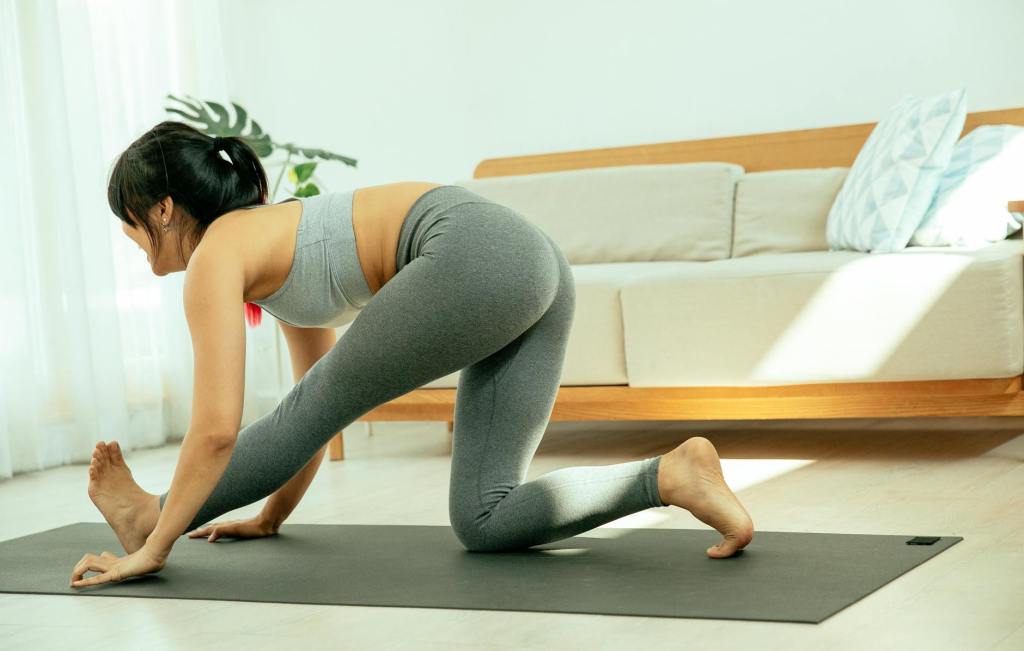
When we talk about stress living in the body, we mean it literally. Research on trauma and chronic stress consistently shows that unresolved stress is held in the body’s tissues, muscles, and nervous system, not just in our thoughts. This is the foundational insight behind somatic approaches to nervous system regulation.
Somatic movement which body-based practices that focus on internal sensation rather than external performance, works by giving the nervous system a way to complete the stress cycle. Chronic stress often leaves the body’s threat response physiologically incomplete: your body mobilized for danger but never had the chance to fully discharge that energy. Somatic movement helps process what’s been stored.
A 2024 meta-analysis published in BMJ Mental Health, examining 112 studies and over 9,000 participants, found that somatic therapy approaches produced significant improvements in stress and trauma symptoms. The effect sizes outperformed traditional talk therapy for body-held stress responses. Somatic approaches significantly reduce cortisol levels and activate the parasympathetic nervous system.
Accessible Somatic Practices for Daily Life
- Body scan with release: Lie down and systematically bring awareness to each part of your body from feet to head. When you notice tension, consciously tighten the area slightly and then slowly release. This pandiculation technique, intentional contract-and-release, teaches the nervous system to let go of habitual holding patterns.
- Spinal undulation: On hands and knees or seated, slowly move your spine in gentle waves arching and rounding, side to side, small circles. Rhythmic spinal movement engages the proprioceptive nervous system and supports regulation through movement rather than stillness.
- Shaking and tremoring: Animals naturally shake after a stress response to discharge excess adrenaline. Humans evolved the same capacity but we tend to suppress it. Standing and allowing your legs and body to shake gently for 2-3 minutes, without forcing it, can help discharge stored stress energy.
- Self-holding: One hand on your heart, one on your belly. Gentle pressure, normal breathing. This simple practice activates the parasympathetic nervous system through touch and supports the felt sense of safety that chronic stress erodes.
You don’t need to practice all of these. Choose one that feels accessible and spend 5 minutes with it daily. Consistency matters far more than duration with somatic work.
Tool 4: Aromatherapy and Essential Oils
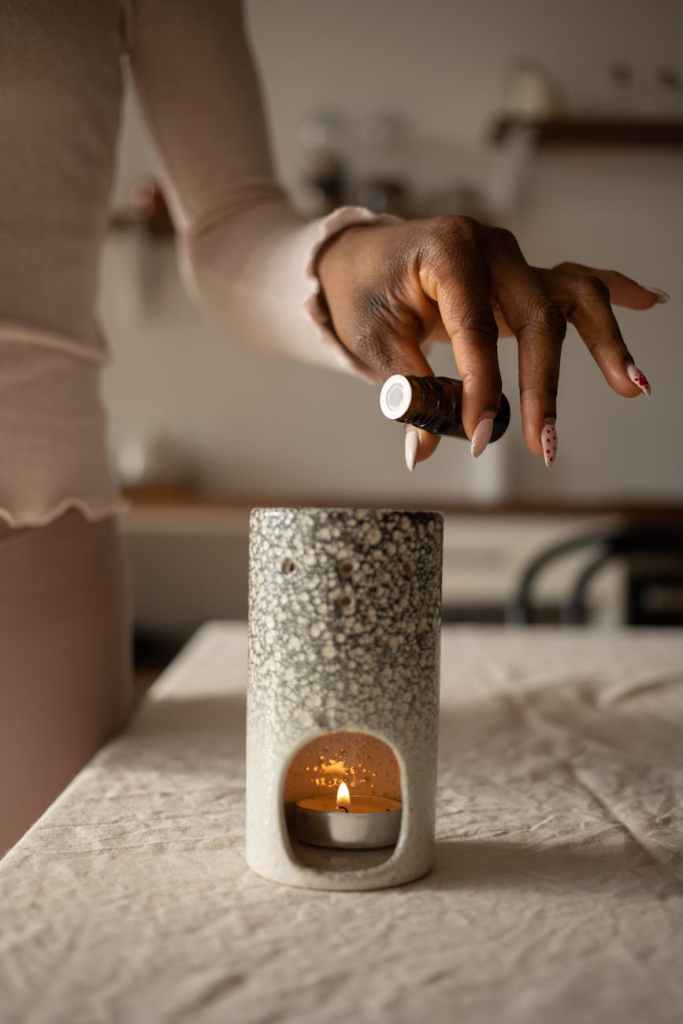
Aromatherapy is often dismissed as soft wellness. However the research on specific essential oils for anxiety and nervous system regulation is more substantial than most people realize, particularly for lavender.
When you inhale an essential oil, its aromatic compounds travel through the olfactory system directly to the limbic system, the brain’s emotional and memory center. This influence neurotransmitter activity and the autonomic nervous system. This isn’t a metaphor. It’s a direct neurological pathway that bypasses conscious thought entirely.
A systematic review published in BMC Complementary Medicine and Therapies, analyzing 11 clinical trials, found that lavender essential oil inhalation produced significant anxiety-reducing effects across both psychological and physiological measures. A broader meta-analysis found that lavender aromatherapy significantly reduced salivary cortisol levels, heart rate, and anxiety scores across 22 randomized controlled trials.
The active compounds in lavender, linalool and linalyl acetate, appear to work by modulating GABA receptors (the same receptors targeted by anti-anxiety medications, though through a gentler pathway). This is in addition to switching the sympathetic nervous system tone toward parasympathetic dominance.
Beyond lavender, research supports several other oils for nervous system regulation:
- Bergamot: Research shows anxiolytic and cortisol-reducing effects, particularly through inhalation.
- Frankincense: Shown in studies to reduce anxiety and support parasympathetic activation; traditionally used in contemplative practices for a reason.
- Clary sage: Research indicates cortisol-lowering effects, particularly relevant for stress-related hormonal disruption in women.
How to Use Essential Oils for Nervous System Support
- Diffuse lavender for 30-60 minutes in the evening as part of a wind-down routine.
- Apply diluted lavender to pulse points (wrists, temples, behind ears) before stressful situations.
- Combine aromatherapy with breathwork for a compounding effect. The olfactory stimulation and the slow breathing work through complementary pathways simultaneously.
Quality matters significantly with essential oils. The physiological effects described in the research above such as cortisol reduction, GABA receptor modulation, parasympathetic activation depend on the presence of specific active compounds like linalool and linalyl acetate in lavender. Synthetic oils or adulterated blends won’t contain these compounds in the right concentrations, which is why third-party testing matters.
I recommend Rocky Mountain Oils because every single batch is independently GC/MS tested and those results are publicly available on their website. You can verify exactly what’s in the bottle before you use it. That’s the standard this research is based on, and it’s the standard I hold myself to when recommending products to my community. For nervous system support specifically I use their lavender (for evening wind-down and diffuse bergamot during the day for its cortisol-reducing properties.
A Note on Spinal Flow: My Personal Experience
The four tools above are where the peer-reviewed research is strongest, and they’re what I feel confident recommending to every mom regardless of circumstances. But I want to share one additional practice that has become part of my own nervous system support with the honest caveat that this one sits outside the scope of the research I’ve cited above.
Spinal Flow is a gentle, hands-on technique developed by Dr. Carli Axford that uses light touch at specific points along the spine and sacrum to support the nervous system’s shift from sympathetic to parasympathetic dominance. It’s rooted in chiropractic and Network Spinal Care, and its underlying philosophy centers on releasing stored stress from the spine and nervous system.
I started exploring Spinal Flow sessions after hitting a wall as I noticed a deep background tension that nothing seemed to fully reach. What I experienced with Spinal Flow was a quality of release I hadn’t accessed any other way. It is a physical unwinding that felt less like doing something and more like finally being allowed to stop holding on.
I’m sharing this as personal experience, not as a research-backed recommendation. The evidence base for Spinal Flow specifically is limited to clinical observation and practitioner training rather than peer-reviewed trials. What I can tell you is that for me, as a complement to the evidence-based tools in this post, it has been meaningful. If you’re curious, look for a certified Spinal Flow practitioner and approach it as one piece of a broader nervous system support strategy.
How to Build a Daily Nervous System Reset Practice: Where to Start

The most common mistake with nervous system regulation is approaching it as an emergency measure. Something you do only when you’re already in crisis. These tools work best as consistent daily practice, building vagal tone and parasympathetic capacity over time, so your nervous system has more resources to draw on before the next wave of stress hits.
That said, starting small is not only acceptable, it’s the strategy most likely to stick. Here’s a realistic entry point:
- Pick one tool. Not four. The one that feels most accessible right now given your schedule and temperament.
- Attach it to something you already do. Extended exhale breathing while the coffee brews. Cold water on your face after your morning shower. A 5-minute body scan before bed. Habit-stacking increases consistency dramatically.
- Give it four weeks. Vagal tone responds to consistency. You won’t feel transformed overnight, but most people notice meaningful shifts in baseline tension levels within 3-4 weeks of daily practice.
- Add the nutrition layer. If you haven’t read The Exhausted Mom’s Energy Reset, the nutrition strategies in that post work synergistically with these tools. Magnesium, omega-3s, and blood sugar stability all directly support nervous system regulation. They’re the biochemical foundation these practices build on.
When Self-Directed Tools Aren’t Enough
These tools are genuinely powerful for the kind of chronic everyday stress that most moms are navigating. But they have limits, and it’s important to name those honestly.
One of the most underrated nervous system regulation strategies is also one of the simplest: reducing the demands coming in. If boundaries are something you struggle with, my post on boundary setting for busy moms is a practical place to start
However, if your nervous system dysregulation is rooted in unresolved trauma, significant anxiety disorder, or depression, self-directed regulation practices are a valuable complement to professional care. Not a replacement for it. A somatic therapist, trauma-informed therapist, or integrative psychiatrist can work with the deeper layers that breathwork and cold water can’t fully reach on their own.
Signs it may be time to seek additional support:
- Persistent inability to feel calm or safe even in objectively low-stress moments
- Hypervigilance that interferes significantly with daily functioning or relationships
- Physical symptoms like chronic pain, digestive issues, or autoimmune flares that worsen with stress
- A history of significant trauma that you haven’t worked through with professional support
Your nervous system developed its current patterns over years, sometimes decades. Healing it is a process, not a checklist. Seeking professional support is not a failure, it’s often the most efficient and compassionate thing you can do for yourself and your family.
The Bottom Line: Your Nervous System Can Learn to Calm Down
A nervous system stuck in chronic stress isn’t a character flaw and it isn’t permanent. It’s a nervous system that learned to prioritize survival, which, given everything you’ve been managing, makes complete sense. What it needs now isn’t more willpower. It needs consistent, gentle, physiologically grounded signals that it’s safe to stand down.
Breathwork. Cold water. Somatic movement. Aromatherapy. None of these are glamorous. None of them will fix everything. But practiced consistently, they build the vagal tone and parasympathetic capacity. This lets you recover from stress faster, sleep more deeply, and show up for your family from a place of regulated presence rather than barely-contained survival mode.
Start with one. Stay with it. Your nervous system is listening.
Tell me in the comments: which of these tools feels most accessible to you right now? I read every response.
What I Use and Recommend
Essential Oils for Nervous System Support– For the aromatherapy tool in this post, quality is everything. I use Rocky Mountain Oils because every batch is independently GC/MS tested which is the exact purity standard the research in this post is based on. For nervous system regulation I reach for their [Lavender] most consistently, and their [Bergamot] is my daytime cortisol support. If you want to explore frankincense or clary sage, both are available in their shop as well.
Essential Oil Diffuse- The InnoGear Aromatherapy Diffuser is what I use at home
Mindful.org Audio Meditations — Evidence-based guided sessions for nervous system regulation. Research-grounded and short enough for real mom life.
Continue reading: Beat Mom Fatigue with Proven Energy Foods | Evidence-Based Strategies to Prevent Mom Burnout | Mom Anxiety Relief: 7 Practical Coping Strategies
Did this resonate? Join my email community for weekly evidence-based wellness strategies designed for the realities of mom life. No fluff, just research-backed tools that fit into your actual day.
OR SUBSCRIBE to the the blog below!
Disclaimer
The information in this post is for educational purposes only and does not constitute medical advice. While I hold a Master’s degree in Family and Developmental Studies and am a certified health and life coach, I am not a licensed medical professional, registered dietitian, or therapist. The strategies, tools, and practices described here are based on peer-reviewed research and are intended to support general wellness education — not to diagnose, treat, cure, or prevent any health condition.
Cold water exposure is not appropriate during pregnancy or for those with cardiovascular conditions, Raynaud’s syndrome, or other circulatory concerns. Always consult your healthcare provider before beginning any new practice, particularly if you have a diagnosed health condition or take medications.
The Spinal Flow Technique described in this post reflects my personal experience only. The evidence base for this specific modality is limited. Please consult your healthcare provider before beginning any new bodywork practice.
If your symptoms are rooted in unresolved trauma, significant anxiety, or depression, please seek support from a qualified mental health professional. Self-directed tools are a valuable complement to professional care, not a replacement for it.
About the Author
Jaime is a senior college instructor with an M.S. in Family and Developmental Studies and a certified health, life, and mastery coach. She is married with two teenage sons. Throughout her own journey of balancing motherhood, career, and life, she became a passionate advocate for maternal health and well-being. She believes that when moms thrive, families flourish.
References
Little, J., et al. (2025). The A52 Breath Method: A narrative review of breathwork for mental health and stress resilience. Stress and Health. https://doi.org/10.1002/smi.70098
Zaccaro, A., et al. (2018). How breath-control can change your life: A systematic review on psycho-physiological correlates of slow breathing. Frontiers in Human Neuroscience, 12, 353. https://doi.org/10.3389/fnhum.2018.00353
Birdee, G., et al. (2023). Slow breathing for reducing stress: The effect of extending exhale. Complementary Therapies in Medicine, 73, 102937. https://doi.org/10.1016/j.ctim.2023.102937
Schell, E., et al. (2022). Vagus activation by Cold Face Test reduces acute psychosocial stress responses. Scientific Reports, 12, 19270. https://doi.org/10.1038/s41598-022-23222-9
Yankouskaya, A., et al. (2023). Short-term head-out whole-body cold-water immersion facilitates positive affect and increases interaction between large-scale brain networks. Biology, 12(2), 211. https://doi.org/10.3390/biology12020211
Ntoumani, M., et al. (2025). Protocol for a systematic review and meta-analysis on the effects of cold-water exposure on mental health. Frontiers in Psychiatry. https://doi.org/10.3389/fpsyt.2025.1603700
Schauer, M., et al. (2024). Psychotherapy, somatic therapy, and pharmacotherapy are all more effective than control in treatment of PTSD: A meta-analysis. BMJ Mental Health, 17(1), 7.
Payne, P., Levine, P.A., & Crane-Godreau, M.A. (2015). Somatic experiencing: Using interoception and proprioception as therapeutic tools. Frontiers in Psychology, 6, 93.
Lim, E.J. (2023). Anxiety-reducing effects of lavender essential oil inhalation: A systematic review. BMC Complementary Medicine and Therapies, 23(1), 105. https://doi.org/10.1186/s12906-023-03989-0
Guo, P., et al. (2020). How strong is the evidence for the anxiolytic efficacy of lavender? Systematic review and meta-analysis of randomized controlled trials. Phytomedicine, 68, 153254.
Manzoor, A., et al. (2025). A comprehensive review on anxiolytic effect of Lavandula angustifolia Mill. in clinical studies. Phytotherapy Research. https://pmc.ncbi.nlm.nih.gov/articles/PMC12454915/
This post contains affiliate links including Amazon Associates links and Rocky Mountain Oils affiliate links. I may earn a small commission if you purchase through them at no additional cost to you. I only recommend products I personally use and trust.
 Balanced Mom Blueprint
Leave a comment