
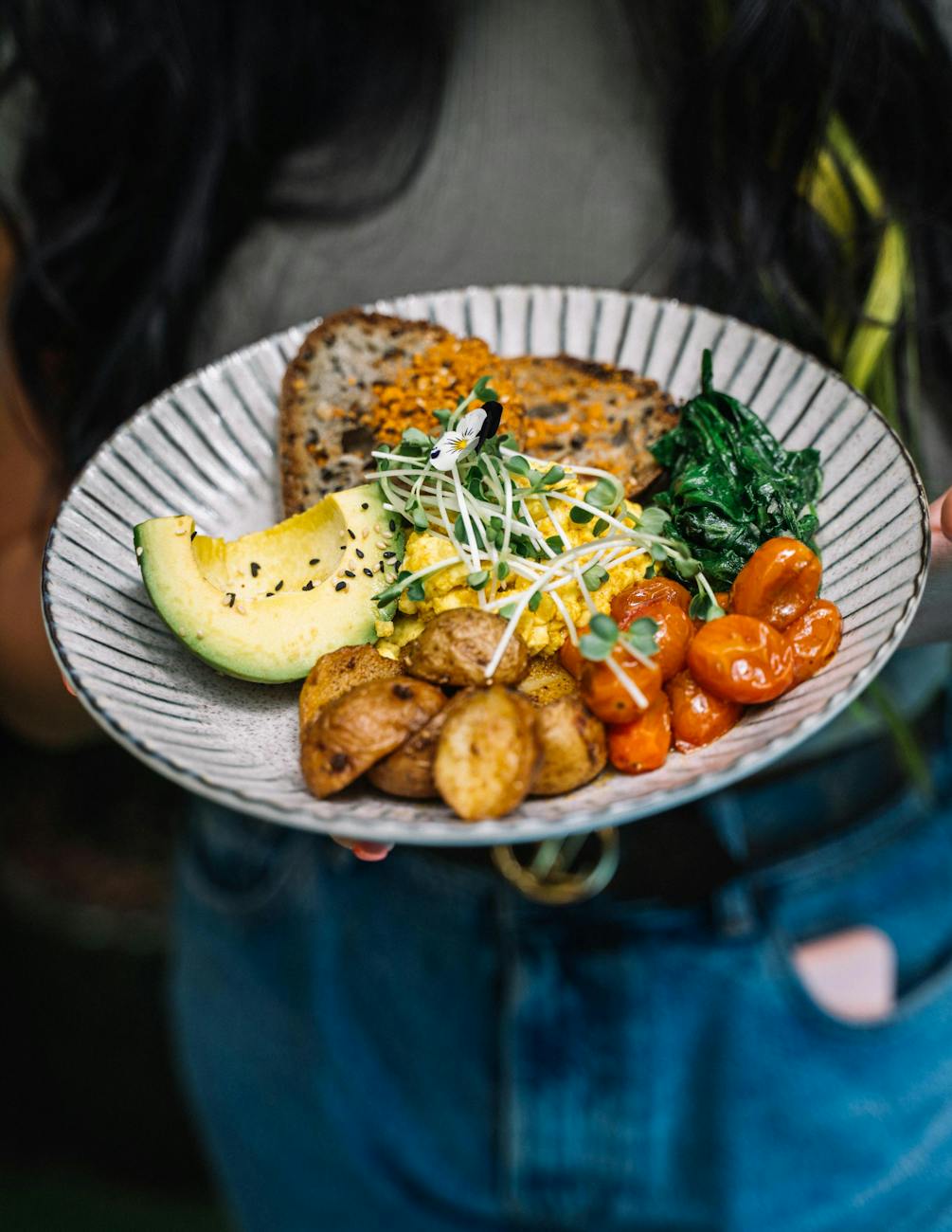
Get My Balanced Plate Cheat Sheet!
Before we dive into the science of balanced eating, I’ve created a free, printable resource just for you. The Balanced Plate Cheat Sheet condenses everything you need to know about personalized nutrition without perfectionism into a single page reference guide. It includes:
- the balanced plate framework
- body awareness techniques
- meal formulas
- prep shortcuts
- warning signs of unhealthy diet patterns
This is all designed to help you create a sustainable approach that works for YOUR unique body. As someone trying to eat well, I know how challenging it can be to plan nutritious meals that are satisfying and sustainable.
Grab you Balanced Plate Cheat Sheet here!
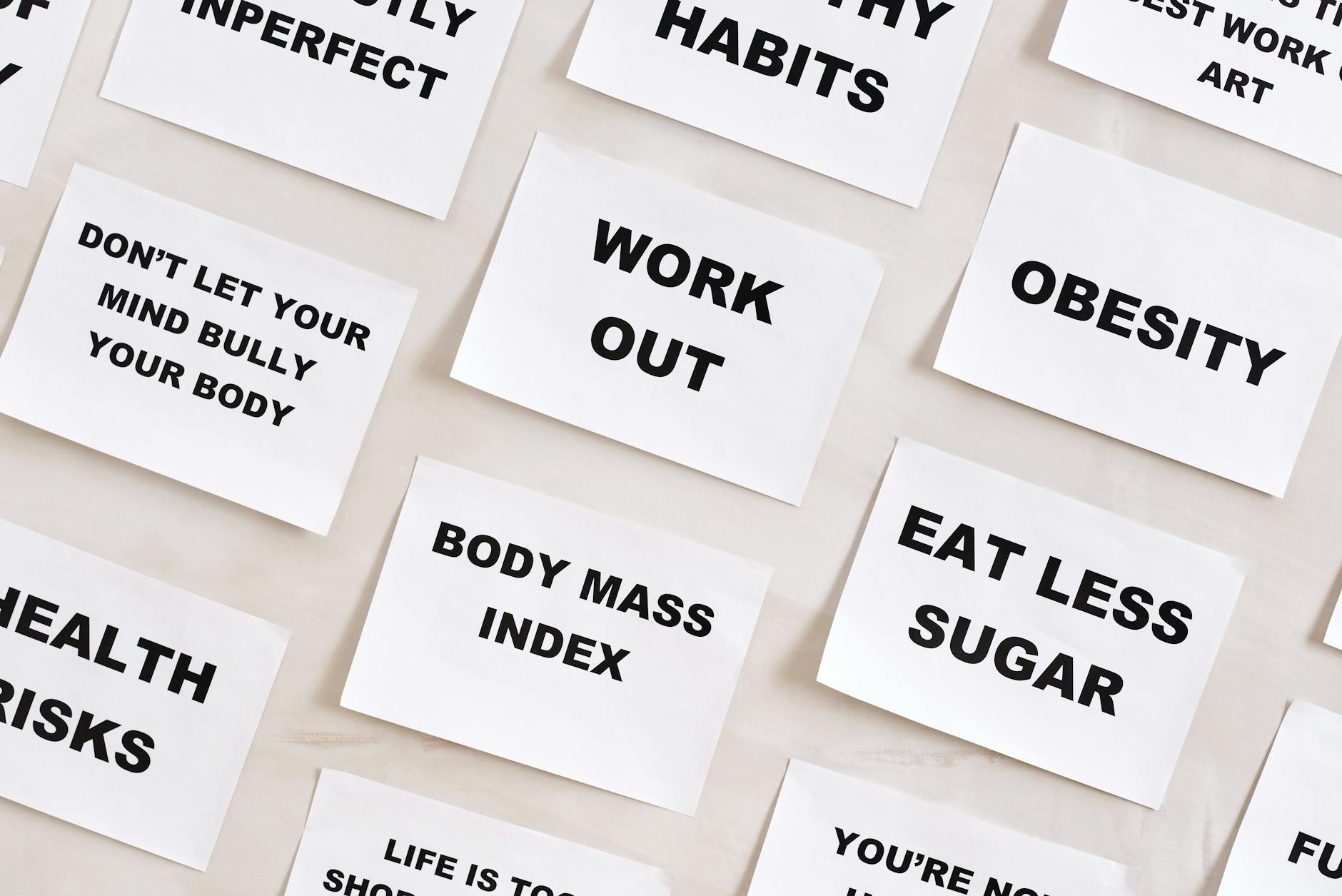
Are you tired of feeling overwhelmed by contradictory nutrition advice? For busy moms especially, the pursuit of a “perfect diet” can feel like a full-time job, one that creates more stress than health. Here’s what the research actually shows: the balanced plate approach consistently outperforms perfectionistic dieting for both physical health outcomes and long-term sustainability. And that’s genuinely great news for real mom life.
The Myth of the Perfect Diet
Let’s get straight to the point: there is no single “perfect diet” that works for everyone. Instagram influencers might claim otherwise. The latest bestselling diet book might also insist on a strict regimen. However, nutrition science supports a much more flexible approach to eating well.
The idea that we need to follow a rigid set of eating rules is not only unnecessary but can create unnecessary stress around mealtimes. This is something none of us needs more of!
Finding What Works For Your Body
Before diving deeper into balanced eating, it’s important to recognize that nutrition is not one-size-fits-all. Research consistently shows that individual responses to foods vary significantly based on:
- Genetic differences
- Gut microbiome composition
- Lifestyle factors
- Personal health history
- Activity levels
- Age and life stage

Paying attention to how different foods make you feel can be as valuable as following general nutrition guidelines
The balanced plate approach provides a helpful framework, but the true goal is to discover which foods make you feel your best. As you implement these nutrition principles, pay attention to:
- Energy levels after meals
- Digestive comfort
- Mood and mental clarity
- Sleep quality
- Physical performance
Hormonal shifts in particular can dramatically change how your body responds to different foods, which is why a one-size-fits-all approach often fails mothers. My post on hormone-balancing foods for overwhelmed mothers covers the specific nutrients that support hormonal balance as part of a personalized whole foods approach.
This self-awareness, combined with sound nutritional principles, creates a personalized approach that’s both scientifically grounded and individually optimized.
What Research Actually Says About Nutrition
When we look at the evidence, a few consistent patterns emerge about what actually matters for nutrition:
Consistency Matters More Than Perfection
Studies consistently show that our overall eating patterns matter far more than individual meals or days. One treat-filled celebration or occasional drive-thru dinner won’t derail your health. It’s what you do most of the time that counts.
Research from the Harvard School of Public Health found that consistent, moderate healthy eating habits provide greater health benefits. This is better than cycling between “perfect” eating and complete abandonment of healthy habits.
My own journey taught me this lesson the hard way. For years, I believed in an all-or-nothing approach. I would follow a strict eating plan perfectly Monday through Friday. By Saturday, I would inevitably “break” and spiral into a weekend of less nutritious choices. By Sunday night, I’d feel guilty and by body felt crummy. I would then vow to start fresh on Monday with even stricter rules. This exhausting cycle continued until I realized that my “perfect” weekday eating couldn’t compensate for weekend habits. The psychological stress of this pattern was likely worse than any nutritional inconsistency.
When I shifted to a more moderate, consistent approach, my energy and digestion improved. This approach allowed flexibility every day while maintaining overall balance. The mental freedom was life-changing. Now I aim for balance at most meals, but never feel like one less-balanced choice “ruins” anything. This consistency has lasted for years. It does not rely on perfectionism. Unlike my previous “perfect” diet attempts, it is sustainable and not short-lived.
What I didn’t realize at the time was that the stress of my all-or-nothing approach was also depleting the nutrients my body needed to actually function well. My post on the stress-nutrition connection explains exactly how chronic stress and restrictive eating compound each other and what to eat to rebuild.
Balance Beats Restriction
Multiple studies have found that highly restrictive diets often backfire. When certain foods become “forbidden,” they often become more desirable, and we develop less ability to self-regulate our eating.
Research by Musher-Eizenman and Holub found that people exposed to a variety of foods without pressure develop healthier relationships with food. They also develop more balanced eating habits over time.
I experienced this principle firsthand when I decided to cut out certain foods to hep with digestion issues. I cut out dairy, gluten, sugar and caffeine. For a few weeks I felt virtuous and committed. In order to keep them out of my diet I started viewing those items as “bad”. Regardless of that mindset I still craved them. When I would give in to any one of those, I felt weak and guilty. I eventually got some support from my Naturopath. She guided me towards slowly reintroducing those foods moderately and remove the “forbidden” label. With this approach, I can really see how my body responds to each one. When I did this, I tuned into my body’s genuine responses. I stopped obsessing and developed a more moderate approach with these foods. Balance created more freedom than restriction did!
The Eating Environment Matters
Interestingly, research suggests that how we eat may be nearly as important as what we eat. As a health coach, I teach my clients a specific tool. It is to try and chew each bite of food 20-30 times before swallowing. For us faster eaters this feels impossible and tortuous at first. But, it really does allow you to enjoy the flavors, slow down and provide a more optimal environment for digestion. Mindful, relaxed eating is associated with:
- Better digestion
- Increased satisfaction
- Improved nutrient absorption
- More awareness of hunger and fullness cues
- Reduced stress around food
A 10-year longitudinal study by Berge et al. found that positive mealtime environments were strongly correlated with healthier eating patterns and better overall wellness outcomes.
Things I have seen that improve your eating environment are committing to eating just one meal a day without distractions. This means no working, watching t.v., or scrolling through your phone. This allows you to just eat and focus on your food. You will find it uncomfortable at first. However, you will also notice how little you were paying attention to the experience of eating. This experience can be quite enjoyable!
If you want more information on Mindful Eating visit Mindful Eating: The Nutrition Source. It provides great information on what it is and why it works. It also covers practices of mindful eating and offers a deep dive into what the research says!
The Balanced Plate Approach
Instead of chasing dietary perfection, most nutrition researchers recommend a balanced plate approach. This flexible framework focuses on proportions rather than strict rules.
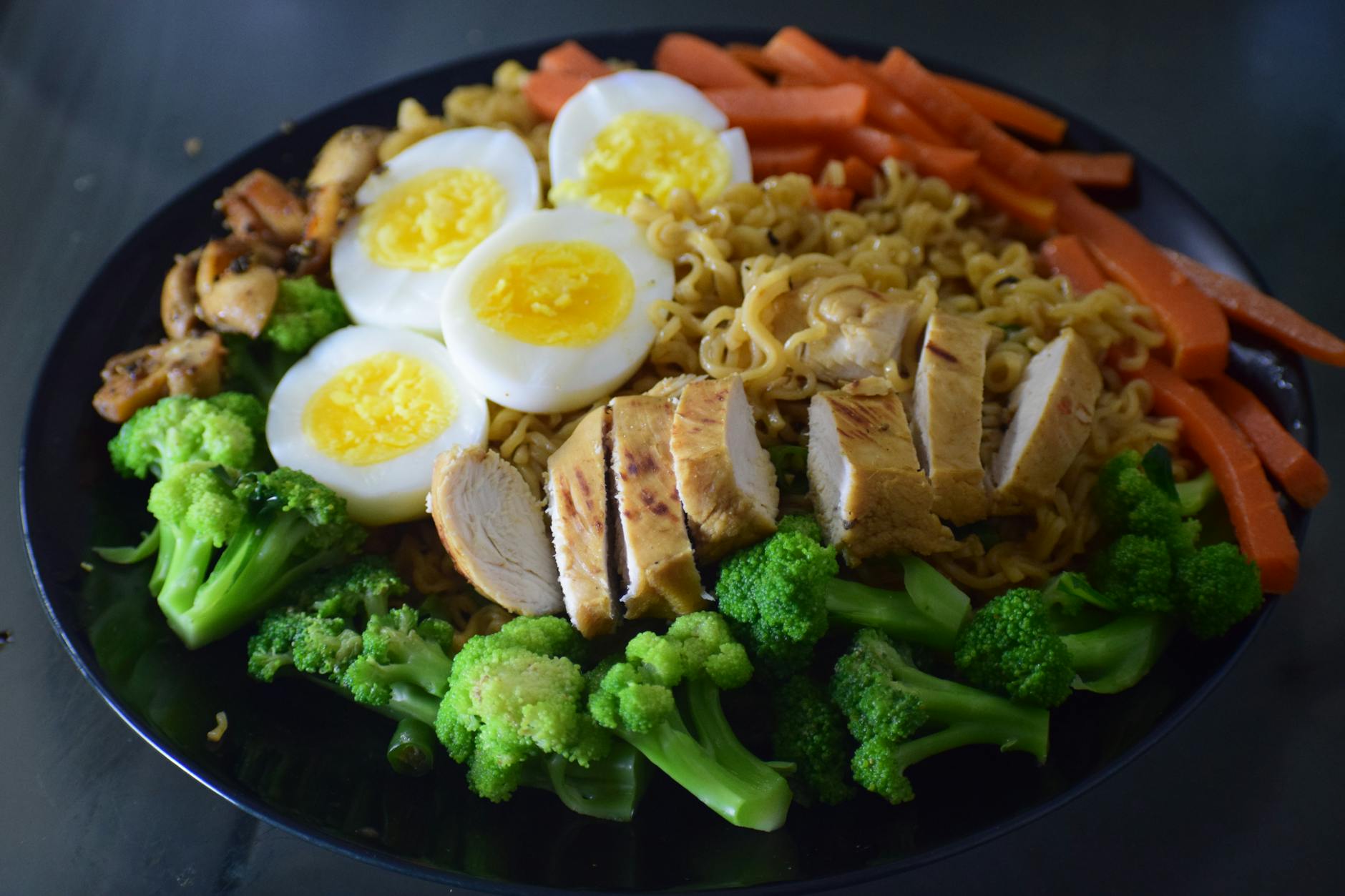
The balanced plate approach offers flexibility while providing nutritional guidance
- Fill half your plate with vegetables and fruits Aim for variety and color, but don’t stress if preferences are limited. Exposure over time is key.
- Make about a quarter of your plate whole grains or starchy vegetables. Brown rice, whole wheat pasta, quinoa, potatoes, or corn all work here.
- Include protein in about a quarter of your plate This can be animal-based (meat, fish, eggs) or plant-based (beans, lentils, tofu).
- Add a source of healthy fat. Avocado, olive oil, nuts, or seeds support nutrient absorption and satisfaction.
Check out mt previous post Energy Boosting Food for Sleep-Deprived Moms: Fuel Your Busy Days for some recipe ideas!
The beauty of this approach is its flexibility. You can adapt it to different cuisines, preferences, and dietary needs while maintaining the basic proportions.
Why Perfect Diets Often Fail
When we obsess over nutritional perfection, we often create problems that undermine our goals:
- Increased mealtime stress When we’re anxious about “perfect” nutrition, meals become tense rather than enjoyable.
- Food perfectionism is often one symptom of a broader perfectionism pattern that affects many high-achieving moms. My post on breaking free from the perfectionism trap covers the research-backed connection between perfectionism and burnout and five strategies to break the cycle.
- Food becomes moralized Foods labeled as “good” or “bad” create unnecessary guilt and shame around eating.
- Budget and time constraints create frustration Perfect diets often require specialty ingredients or extensive prep, leading to burnout.
- The rest of life gets sidelined. When food perfection takes center stage, other aspects of well-being suffer. Joy, connection, and relaxation are affected.
- Sustainability diminishes Overly restrictive approaches are difficult to maintain long-term, often leading to giving up entirely.
The psychological stress of cycling between strict dieting and abandonment is also one of the overlooked drivers of maternal burnout. My post on evidence-based strategies to prevent mom burnout covers how stress patterns, including around food, contribute to the full burnout picture.
Simple Steps for Better Nutrition (Without the Stress)

Adding more nutrient dense foods to your routine can be more effective than focusing on what to eliminate
Ready to embrace a more balanced approach? Here are evidence-based strategies that actually work:
- Focus on addition, not subtraction. Instead of cutting out “bad” foods, focus on adding nutrient dense options alongside familiar favorites.
- Create positive eating environments. Even with the healthiest food choices, a stressed or rushed eating environment undermines benefits. Aim for pleasant, mindful meals when possible.
- Get involved with food preparation. Research by Wolfson and Bleich shows that people who prepare their own food tend to make healthier choices overall.
- My post Quick and Healthy Meal Prep for Busy Families gives you some tips for success here!
- For practical implementation during the most chaotic seasons of mom life, my post on survival nutrition for busy families covers ten evidence-based strategies for maintaining balanced eating even when your schedule feels impossible.
- Practice balanced eating patterns. Research by Loth et al. found that consistent, moderate healthy eating patterns are more effective than alternating between restriction and indulgence .
- Keep exposure gentle and pressure-free. It can take 15-20 exposures to accept new foods or ways of eating. Patience wins over pressure.
Balance vs. Perfection in Practice
The research clearly demonstrates that the pursuit of dietary perfection often backfires. Balanced, sustainable approaches lead to better long-term outcomes. Consider aiming for roughly 80% balanced meals and 20% more flexible choice. This is a research-supported approach that allows for both nutrition and enjoyment.
Signs You Might Be Leaning Too Far Toward Perfectionism:
- Feeling anxiety or guilt around food choices
- Avoiding social situations that involve food
- Spending excessive time planning or thinking about food
- Following rigid rules regardless of hunger or satisfaction
- Finding little enjoyment in eating
Signs You Might Benefit From More Structure:
- Frequently feeling low energy or sluggish
- Experiencing digestive discomfort regularly
- Struggling with unpredictable hunger and cravings
- Resorting to takeout or processed foods more often than you’d like
- Finding it difficult to include vegetables consistently
The balanced plate approach offers a middle ground and enough structure to support nutrition. This also allows flexibility to enjoy food and respond to your body’s unique needs.
When nutrition stress is just one layer of deeper depletion:
If the pattern of all-or-nothing eating described in this post resonates and you recognize it as part of a bigger cycle of exhaustion and overwhelm, the Burnout Recovery Bundle addresses the full picture.
$27 — Get the Burnout Recovery Bundle
Your Family’s Nutrition Journey
Remember that good nutrition is a long game. Small, consistent changes add up over time, and creating a positive food environment. This will benefit your family far more than chasing an impossible standard of dietary perfection.
What small step can you take this week toward more balanced family meals? Sometimes the simplest changes, like adding a fruit to breakfast or an extra vegetable at dinner, create the most sustainable improvements.
Don’t forget your free Balanced Plate Cheat Sheet!
Ready to put these principles into practice?
Download my free Balanced Plate Cheat Sheet!! It is a comprehensive guide to creating personalized nutrition habits without perfectionism. This printable resource includes everything you need to start implementing a balanced approach today:
✓ Visual balanced plate framework
✓ Body awareness checklist
✓ Quick-start meal formulas
✓ 5-minute meal prep strategies
✓ Progress-focused action steps
This cheat sheet takes the guesswork out of balanced eating. It helps you discover what truly works for your unique body and lifestyle.
What I Use and Recommend
Plan to Eat — Meal planning made simple. Drag-and-drop calendar with automated shopping lists that makes the balanced plate approach practical in real mom life.
Mindful.org Audio Meditations — For developing the mindful eating environment discussed above. Short, research-grounded sessions that help you slow down and actually taste your food.
Balanced Plate Cheat Sheet — My free printable resource for implementing everything in this post without perfectionism.
Want more evidence-based nutrition strategies for your family?

Getting kids involved in meal preparation can transform their relationship with food
Just enter your email below to join our community of parents focused on evidence-based wellness.
I respect your privacy and will never share your information. Unsubscribe anytime.
What’s your biggest challenge when it comes to family nutrition? Share in the comments below, and let’s problem-solve together!
About the Author: Jaime is a senior college instructor with a M.S. in Family and Developmental Studies. She is a certified health, life and mastery coach. She is married with two teenage sons. Throughout her journey of balancing motherhood, career and life she has become an advocate for maternal health and well-being. She believes that when Moms thrive, families flourish.
The information in this post is for educational purposes only and does not constitute medical or nutritional advice. While I hold a Master’s degree in Family and Developmental Studies and am a certified health and life coach, I am not a licensed medical professional or registered dietitian. Individual nutritional needs vary significantly. Please consult with a registered dietitian or healthcare provider before making significant changes to your or your family’s diet, particularly if anyone has a diagnosed health condition, food allergy, or history of disordered eating.
A quick note: Some links in this post are affiliate links, meaning I may earn a small commission if you purchase through them at no additional cost to you. I also participate in the Mindful.org affiliate program. I only recommend products I personally use and trust.
References
Yee, A. Z., Lwin, M. O., & Ho, S. S. (2017). The influence of parental practices on child promotive and preventive food consumption behaviors: A systematic review and meta-analysis. International Journal of Behavioral Nutrition and Physical Activity, 14(1), 47.
Berge, J. M., Wall, M., Hsueh, T. F., Fulkerson, J. A., Larson, N., & Neumark-Sztainer, D. (2015). The protective role of family meals for youth obesity: 10-year longitudinal associations. The Journal of Pediatrics, 166(2), 296-301.
Birch, L. L., & Fisher, J. O. (1998). Development of eating behaviors among children and adolescents. Pediatrics, 101(3 Pt2), 539-549.
Harvard T.H. Chan School of Public Health. (2022). The Nutrition Source: Healthy Eating Plate. Retrieved from https://www.hsph.harvard.edu/nutritionsource/healthy-eating-plate/
Loth, K. A., MacLehose, R. F., Fulkerson, J. A., Crow, S., & Neumark-Sztainer, D. (2013). Food-related parenting practices and adolescent weight status: A population-based study. Pediatrics, 131(5), e1443-e1450.
Musher-Eizenman, D., & Holub, S. (2007). Comprehensive Feeding Practices Questionnaire: Validation of a new measure of parental feeding practices. Journal of Pediatric Psychology, 32(8), 960-972.
Wolfson, J. A., & Bleich, S. N. (2015). Is cooking at home associated with better diet quality or weight-loss intention? Public Health Nutrition, 18(8), 1397-1406.
 Balanced Mom Blueprint
Leave a reply to Survival Nutrition: 10 Evidence-Based Strategies for Feeding Your Family During End-of-School Chaos – Balanced Mom Blueprint Cancel reply