

Discover the common nutrition lies busy moms tell themselves and learn evidence-based strategies to nourish your family without the guilt or overwhelm.
As I stood in my kitchen at 5:47 PM last Tuesday, staring at a bag of frozen taquitos while my my teenage son asked “What’s for dinner?”, I caught myself saying those familiar words: “I’m such a lame mom for feeding them this again.”
Sound familiar?
If you’re a busy mom, you’ve probably told yourself some version of this nutrition lie. The truth is, we’re our own worst critics when it comes to feeding our families. And the stories we tell ourselves often don’t match what research actually shows about family nutrition.
I have spent years studying family development and working with moms as a health coach. In this time, I’ve identified the most common nutrition lies we tell ourselves. And more importantly, what science says we should focus on instead.
The Mental Load of Family Nutrition
Before we dive into these lies, let’s acknowledge something important: feeding a family is exhausting work. Research from the University of Cambridge shows that food-related decisions account for over 200 choices we make daily (Wansink & Sobal, 2007). When you’re already managing the mental load of motherhood, it’s no wonder we create shortcuts in our thinking about food.
But here’s what I’ve learned: the stories we tell ourselves about nutrition often create more stress than the actual food choices we make.

Lie #1: “I’m Failing My Family If I Don’t Cook Everything From Scratch”
What we tell ourselves: Good moms make homemade meals every night. Using convenience foods means I’m lazy or don’t care about my family’s health.
What research actually says: A 2019 study in the Journal of Nutrition Education and Behavior found that meal frequency and family eating patterns matter more than whether food is homemade or not (Trofholz et al., 2019).
The researchers discovered that families who ate together regularly, regardless of whether the meal was homemade or included some convenience items, had better nutritional outcomes than families who rarely shared meals.
The reality check: Last month, I served my family a dinner that was 50% convenience foods: rotisserie chicken from the store, pre-washed salad mix, and microwaved roasted potatoes. We sat together, talked about our day, and my kids got protein, vegetables, and complex carbs. Mission accomplished.
Evidence-based alternative: Focus on creating balanced plates rather than homemade perfection. You can check out my previous post Balanced Plate vs. Perfect Diet: What Research Really Reveals About Personal Nutrition if you would like to learn more about it.
Lie #2: “My Kids Will Be Malnourished If They Don’t Eat Vegetables at Every Meal”
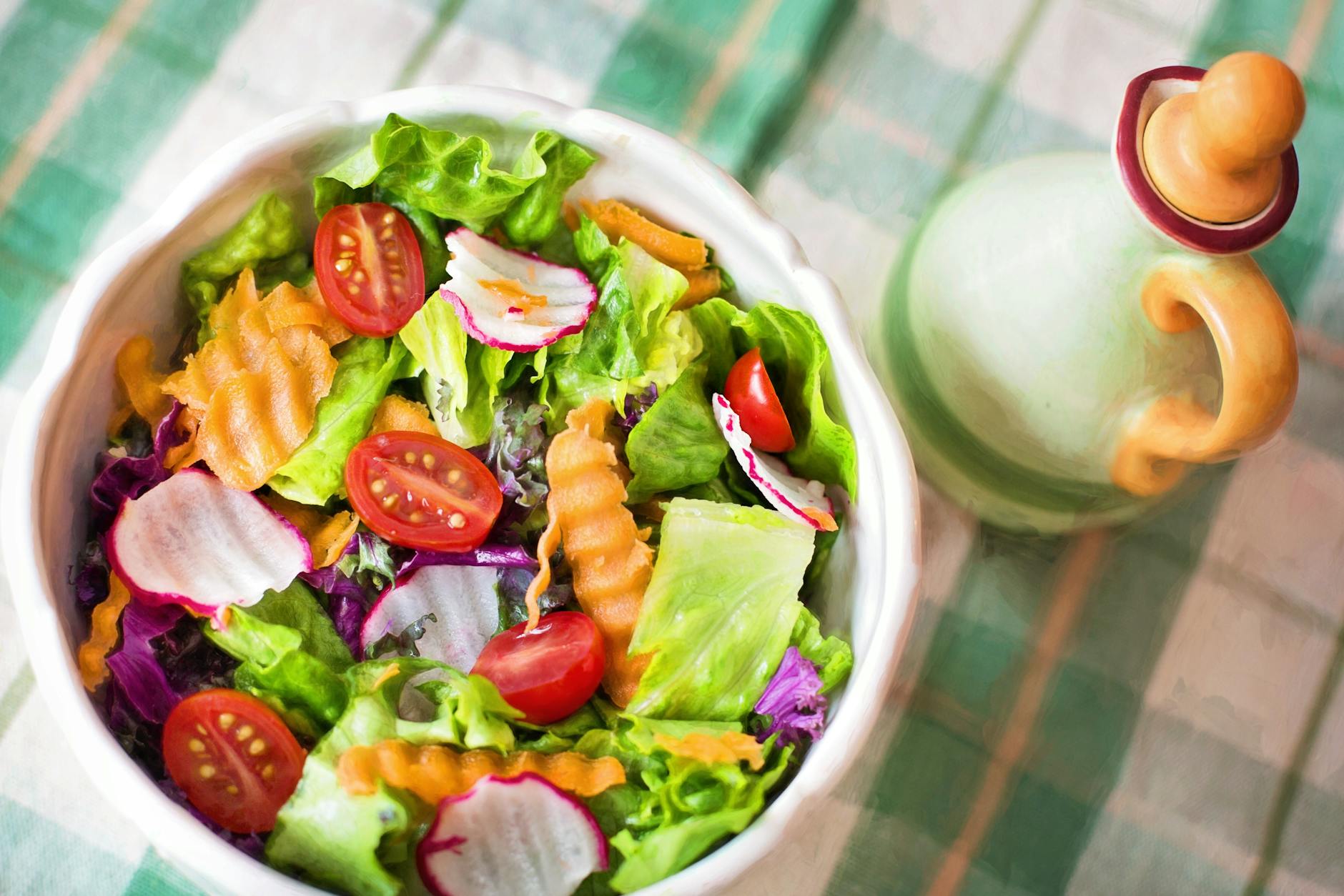
What we tell ourselves: If my child doesn’t eat vegetables today, they’re missing crucial nutrients and I’m setting them up for health problems.
What research actually says: Pediatric nutrition research shows that children’s eating patterns should be evaluated over weeks, not individual meals (Birch & Doub, 2014).
A landmark study from the American Journal of Clinical Nutrition tracked children’s eating patterns. They found that while daily intake varied dramatically, weekly nutritional intake was remarkably consistent when children had access to a variety of foods (Birch et al., 2001).
The reality check: My youngest went through a phase where he ate only beige foods (cheese, chicken nuggets, crackers, fries, etc) for what felt like forever. I was convinced I was failing him nutritionally. But when I tracked his intake over a week, he was actually getting nutrients from various sources. This included the vitamins in his “terrible” chicken nuggets and the fiber in his beloved crackers.
Evidence-based alternative: Think weekly, not daily. Offer vegetables regularly without pressure. Trust that children will eat what their bodies need when given consistent access to variety.
Lie #3: “Snacking Is Always Bad and Shows I Have No Self-Control”
What we tell ourselves: Good moms don’t snack, and they definitely don’t let their kids snack. Snacking means we’re weak or poorly planned.
What research actually says: Research from the American Journal of Clinical Nutrition shows that planned snacking can actually improve nutritional intake and help regulate blood sugar throughout the day (Kerver et al., 2006).
The key word here is “planned.” Studies indicate that strategic snacking can improve energy levels. It is especially effective when it includes protein and fiber. This method can also prevent overeating at meals.
The reality check: I used to feel guilty about my afternoon snack. Then I realized this snack was giving me sustained energy to tackle the dinner rush and evening activities with my kids. It wasn’t a failure of willpower; it was smart fuel management.
Evidence-based alternative: Plan nutrient-dense snacks that include protein, healthy fats, or fiber. Think apple slices with nut butter, Greek yogurt with berries, or hummus with vegetables.
Lie #4: “I Should Be Able to Make Everyone Happy at Mealtime”
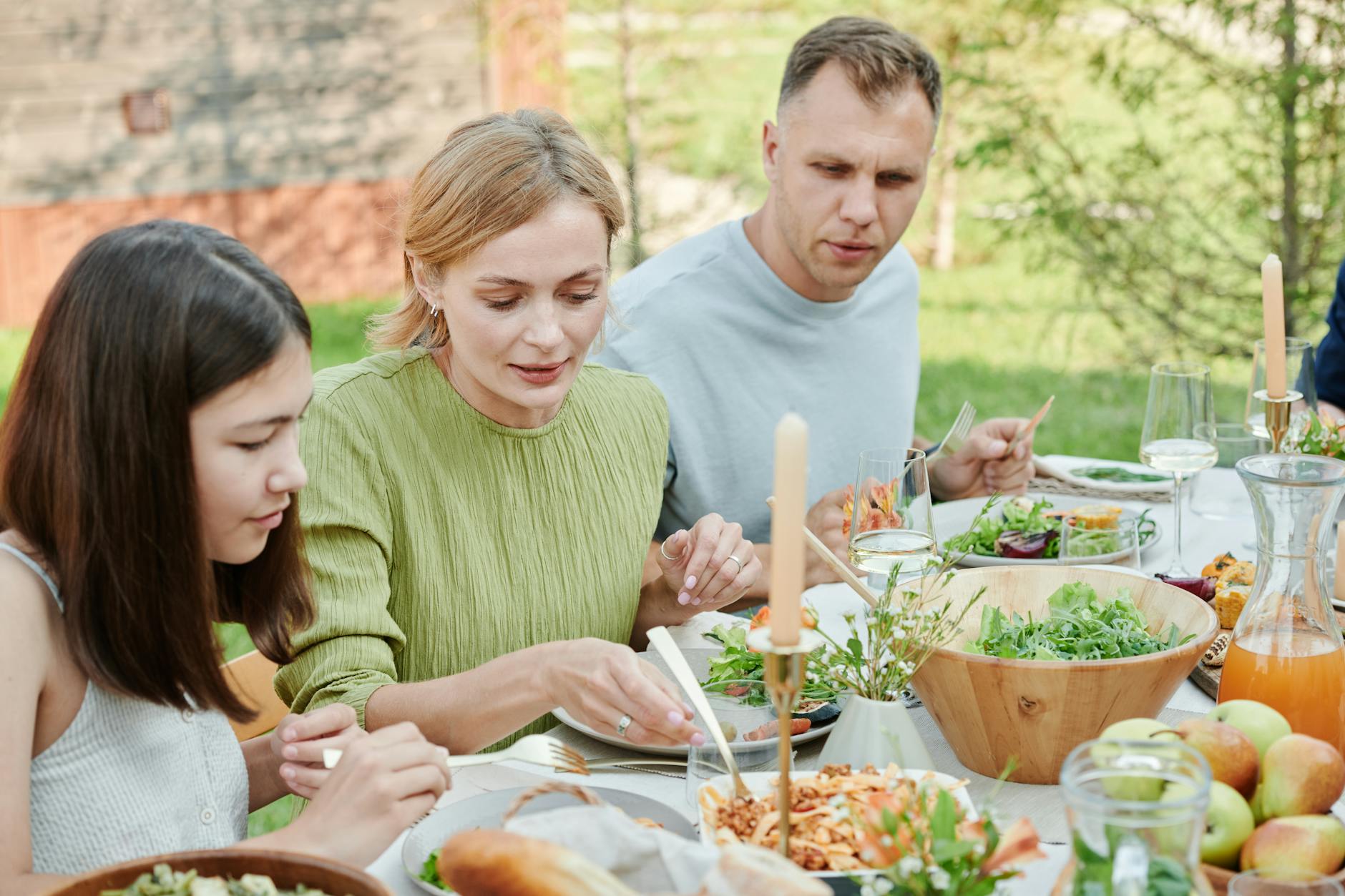
What we tell ourselves: A good mom can create meals that everyone in the family loves. If someone complains or doesn’t eat, I’ve failed.
What research actually says: Family food behavior research shows that it’s developmentally normal for family members to have different food preferences (Savage et al., 2007).
Studies indicate that trying to be a “short-order cook” actually increases picky eating behaviors and family meal stress. Research from the Journal of the American Dietetic Association found that families who used a “take it or leave it” approach to meals had less food-related conflict and more adventurous eaters over time.
The reality check: There’s no meal that will make everyone in my family completely happy, and that’s okay. My job is to provide balanced options, not to be a restaurant.
Evidence-based alternative: Offer one meal with at least one item each family member will eat. Don’t become a short-order cook, but ensure there’s something safe for everyone.
Lie #5: “Eating Out or Ordering Takeout Makes Me a Bad Mom”
What we tell ourselves: Good moms cook at home. Relying on restaurants or takeout means I’m not taking care of my family properly.
What research actually says: Research from the Journal of the Academy of Nutrition and Dietetics found that the frequency of eating out matters less than the choices made when eating out (Kant & Graubard, 2004).
Studies show that families who occasionally eat out but make balanced choices have similar nutritional outcomes to families who always eat at home. They should include vegetables, choose grilled over fried, or share large portions.
The reality check: Last week was particularly chaotic with my son’s baseball games, work and getting my son ready for a trip across the country. We ordered Thai food one night and had pizza another. But we also added a side salad to the pizza and got a Thai entree that included vegetable. More importantly, we ate together as a family during a busy time.
Evidence-based alternative: Make strategic choices when eating out rather than avoiding it entirely. Look for meals that include vegetables, choose grilled over fried when possible, and consider portion sizes.
Lie #6: “I Need to Restrict My Own Food to Be a Good Role Model”
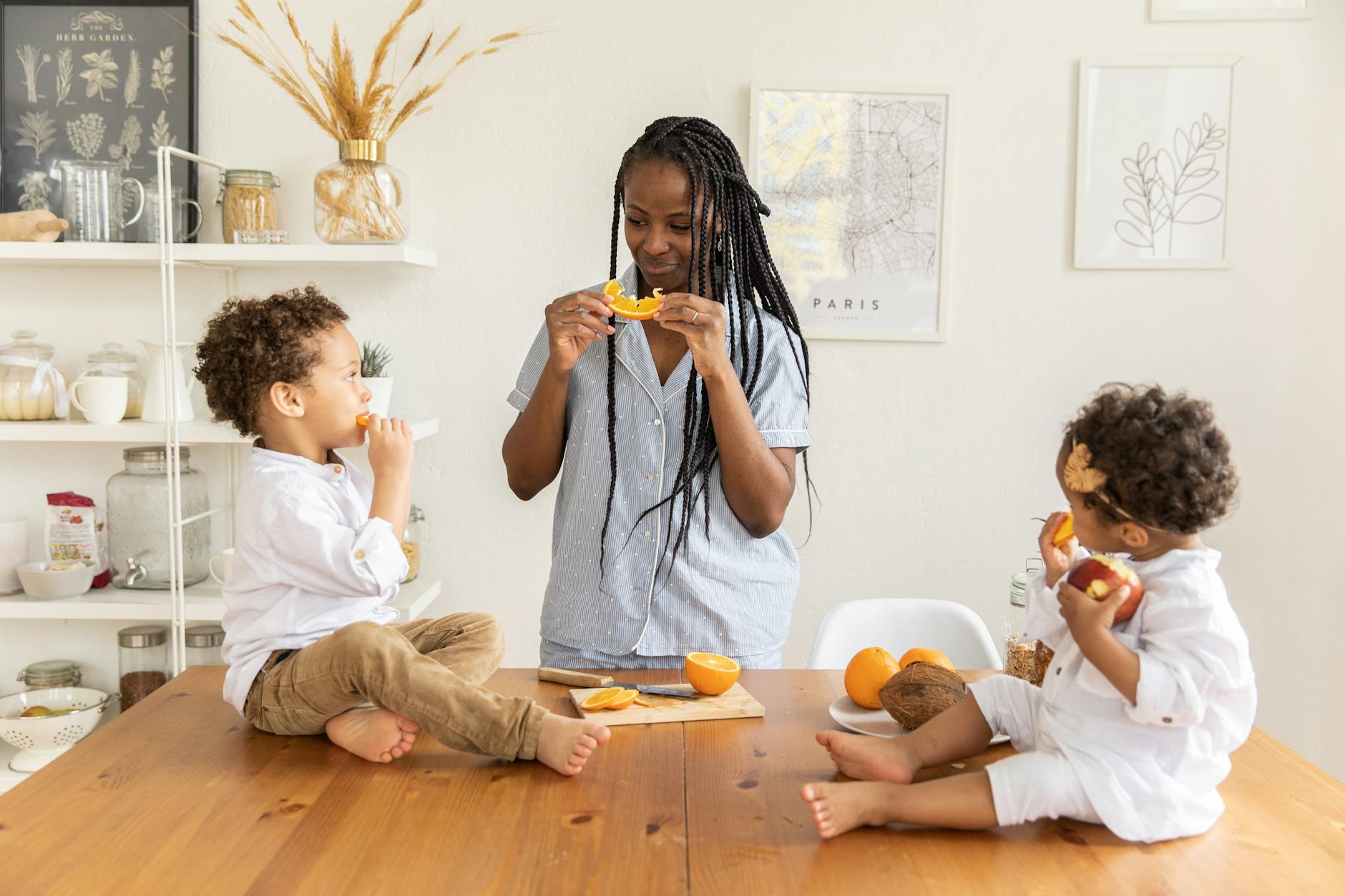
What we tell ourselves: I shouldn’t eat treats or enjoy food too much in front of my kids. I need to model restriction and control.
What research actually says: Research on eating behavior modeling shows that children learn more from observing balanced eating patterns than restrictive ones (Birch & Fisher, 2000).
Mothers who demonstrate a healthy relationship with food tend to raise children with better intuitive eating skills. This healthy approach includes enjoying treats in moderation. This also includes lower rates of disordered eating.
The reality check: I used to hide my sweets intake. I did this to reduce my boys’ desire to want sweets themselves. Now I occasionally enjoy a small piece of dark chocolate after dinner, and I talk about how it tastes good and how I’m savoring it. My kids are learning that food can be both nourishing and enjoyable. And it’s ok to eats sweets now and again!
Evidence-based alternative: Model balanced eating that includes both nutritious foods and occasional treats. Show your children that food is meant to be enjoyed, not feared.
Lie #7: “There’s One Perfect Way to Feed My Family”
What we tell ourselves: If I could just find the right diet, meal plan, or approach, everything would fall into place and I’d be a better mom.
What research actually says: Nutritional research consistently shows that there are multiple ways to achieve healthy eating patterns (Mozaffarian & Ludwig, 2010).
Studies compare different dietary approaches, from Mediterranean to DASH to plant-based. Sustainability and consistency matter more than perfection in any single approach.
The reality check: I’ve tried so many different approaches over the years: meal planning, batch cooking, themed dinner nights. Some worked for a while, others didn’t fit our lifestyle. What I’ve learned is that the best approach is the one that reduces stress and works for your unique family.
Evidence-based alternative: Focus on consistent patterns rather than perfect plans. Find an approach that you can maintain long-term without overwhelming yourself.
The Science-Backed Truth About Family Nutrition
After reviewing numerous studies and working with families, here’s what research consistently shows about feeding families well:
1. Consistency Beats Perfection
Studies show that families who eat together regularly have better nutritional outcomes than those who eat “perfectly” but inconsistently (Hammons & Fiese, 2011).
2. Variety Over Time Matters More Than Daily Balance
Research indicates that nutritional needs are met over weeks, not individual meals (Birch & Doub, 2014).
3. Reduced Stress Improves Eating Behaviors
Studies show that family meal stress is associated with poorer eating behaviors in both children and adults (Berge et al., 2014).
4. Modeling Matters More Than Rules
Children learn eating behaviors more from observation than from rules about food (Birch & Fisher, 2000).
Your Action Plan: From Lies to Evidence-Based Living
Ready to ditch the nutrition lies and embrace what science actually tells us? Here’s your practical action plan:
This Week:
- Choose one nutrition lie you frequently tell yourself.
- Replace it with the evidence-based alternative from this post.
- Track how this shift affects your stress levels around mealtime.
This Month:
- Implement the “weekly view” approach to family nutrition.
- Plan 2-3 strategic snacks that include protein or fiber.
- Practice one dinner where you don’t try to please everyone. Offer balanced options and let family members choose.
This Quarter:
- Develop a sustainable meal rhythm that works for your family’s schedule.
- Create a list of “emergency meals” that meet your nutritional standards without stress.
- Model balanced eating by enjoying both nutritious foods and occasional treats.
The Bottom Line
Here’s what I want you to remember: you’re not failing your family if you don’t follow every nutrition rule perfectly. The research is clear that consistent, balanced eating patterns, not perfect meals, create healthy families.
Your kids need a mom who approaches food with confidence and balance, not stress and perfection. They need someone who models that eating can be both nourishing and enjoyable.
The next time you catch yourself telling one of these nutrition lies, take a deep breath and ask yourself: “What does the research actually say about this? And what would be most helpful for my family right now?”
Trust me, your family will be healthier and happier when you ditch the lies and embrace the evidence.
What nutrition lies do you find yourself telling most often? Share in the comments below. You might be surprised how many other moms struggle with the same thoughts.
References
Berge, J. M., Jin, S. W., Hannan, P., & Neumark-Sztainer, D. (2014). Structural and interpersonal characteristics of family meals: associations with adolescent body mass index and dietary patterns. Journal of the Academy of Nutrition and Dietetics, 113(6), 816-822.
Birch, L. L., & Doub, A. E. (2014). Learning to eat: birth to age 2 y. American Journal of Clinical Nutrition, 99(3), 723S-728S.
Birch, L. L., & Fisher, J. O. (2000). Mothers’ child-feeding practices influence daughters’ eating and weight. American Journal of Clinical Nutrition, 71(5), 1054-1061.
Birch, L. L., Johnson, S. L., Andresen, G., Peters, J. C., & Schulte, M. C. (2001). The variability of young children’s energy intake. American Journal of Clinical Nutrition, 324(2), 232-235.
Hammons, A. J., & Fiese, B. H. (2011). Is frequency of shared family meals related to the nutritional health of children and adolescents? Pediatrics, 127(6), e1565-e1574.
Kant, A. K., & Graubard, B. I. (2004). Eating out in America, 1987-2000: trends and nutritional correlates. Preventive Medicine, 38(2), 243-249.
Kerver, J. M., Yang, E. J., Bianchi, L., & Song, W. O. (2006). Dietary patterns associated with risk factors for cardiovascular disease in healthy US adults. American Journal of Clinical Nutrition, 83(6), 1200-1210.
Mozaffarian, D., & Ludwig, D. S. (2010). Dietary guidelines in the 21st century—a time for food. Journal of the American Medical Association, 304(6), 681-682.
Savage, J. S., Fisher, J. O., & Birch, L. L. (2007). Parental influence on eating behavior: conception to adolescence. Journal of Law, Medicine & Ethics, 35(1), 22-34.
Trofholz, A. C., Tate, A. D., Draxten, M. L., Neumark-Sztainer, D., & Berge, J. M. (2019). Home food environment factors associated with the presence of fruit and vegetables at dinner: A direct observational study. Journal of Nutrition Education and Behavior, 51(5), 631-639.
Wansink, B., & Sobal, J. (2007). Mindless eating: The 200 daily food decisions we overlook. Environment and Behavior, 39(1), 106-123.
About the Author: Jaime is a senior college instructor with a M.S. in Family and Developmental Studies. She is a certified health, life and mastery coach. She is married with two teenage sons. Throughout her journey of balancing motherhood, career and life she has become an advocate for maternal health and well-being. She believes that when Moms thrive, families flourish.
 Balanced Mom Blueprint
Leave a comment